European Leaders Boost Nuclear and Hypersonic Ambitions as U.S. Leadership Wanes
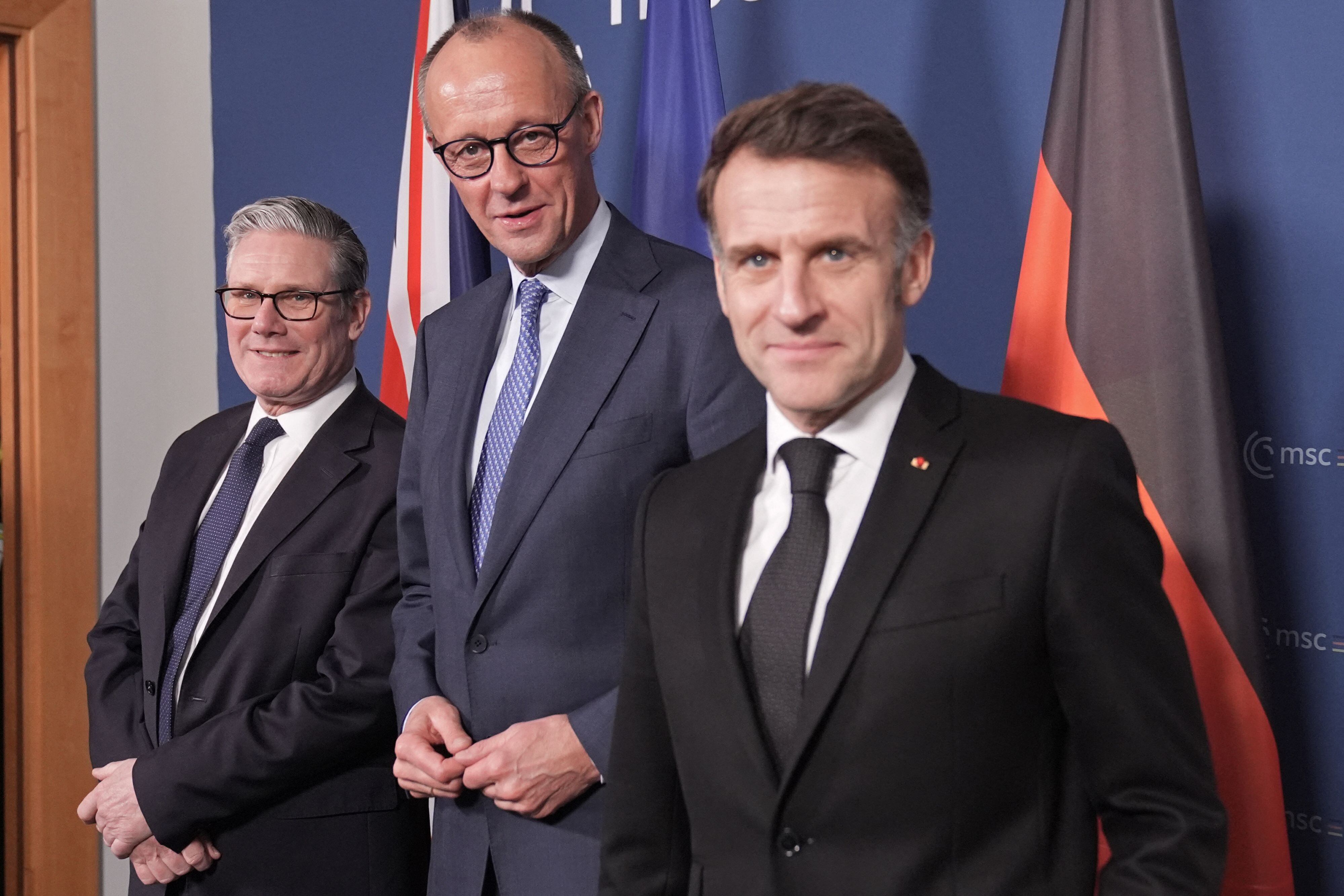
European Leaders Highlight the Need for Geopolitical Autonomy
European leaders attending the Munich Security Conference, which commenced on the 13th, made a strong statement about the shifting dynamics in global politics. They declared that "the U.S. leadership is faltering" and emphasized the importance of strengthening Europe’s own power. This sentiment reflects a growing desire among European nations to assert greater independence in matters of security and foreign policy.
France and Germany Explore a European Nuclear Umbrella
On the same day as the conference began, France, a nuclear-armed state, formalized discussions on establishing a European nuclear umbrella with Germany. This initiative aims to enhance Europe's strategic autonomy by reducing reliance on U.S. nuclear capabilities. Meanwhile, the British government announced progress on the 'Stratus' project—a next-generation hypersonic stealth missile developed in collaboration with France and Italy. This project is intended to replace the existing Storm Shadow missile and represents a significant step toward European self-reliance in defense technology.
Macron Advocates for Geopolitical Power
French President Emmanuel Macron delivered a speech at the conference where he emphasized the need for Europe to possess geopolitical power. He stated, “Europe must learn to possess geopolitical power” and called for a clear definition of long-term security interests in the region. Macron also stressed the importance of having the resolve and influence to pursue these interests.
Macron addressed U.S. criticism of Europe, saying, “There has been a tendency to belittle Europe or openly criticize it.” He argued that instead of being criticized, Europe should be seen as an example. Macron reiterated his call for European self-reliance, stating, “Now is the right time to show boldness and make Europe strong.” He highlighted the necessity of reorganizing Europe’s security structure and redefining nuclear deterrence through this approach.
Legal Obligations and Nuclear Deterrence
France and Germany have formalized discussions on a European nuclear umbrella. German Chancellor Friedrich Merz mentioned that discussions on European nuclear deterrence have begun, emphasizing that legal obligations will be respected throughout the process. This move marks a significant shift in how Europe approaches its security strategy.
Currently, the U.S. deploys tactical nuclear weapons in Germany under a nuclear-sharing agreement. However, Germany is prohibited from developing its own nuclear weapons due to the "2+4 Agreement" signed during its 1990 reunification. This agreement involved the U.S., UK, France, and the Soviet Union.
Expanding Nuclear Capabilities in Europe
In addition to France and the UK, which already possess their own nuclear weapons, other European countries are exploring ways to enhance their nuclear deterrence. Swedish Prime Minister Ulf Kristersson mentioned ongoing discussions about receiving nuclear protection from France and the UK. Similarly, Poland has seen calls for nuclear armament, reflecting a broader trend across the continent.
The Stratus Project: A Step Toward Independence
The British government has reinforced the argument for European self-reliance by publicly announcing a joint project with France and Italy to develop the 'Stratus' missile. This advanced hypersonic stealth missile is designed to replace the Storm Shadow missile and signifies a commitment to developing independent defense capabilities.
Merz’s Remarks on Great-Power Politics
German Chancellor Friedrich Merz emphasized the changing geopolitical landscape, stating, “We have entered an era where power and great-power politics dominate openly once again.” He added, “U.S. leadership is being challenged and may already have been lost.” Merz referred to the annual report of the Munich Security Conference, which criticized former U.S. President Donald Trump for dismantling the existing international order. He noted that the order was incomplete even in its heyday but no longer exists in the same form.
Merz further argued that in an era of great-power competition, the U.S. alone may not be sufficient. He stressed the importance of restoring transatlantic trust, noting that becoming a member of NATO benefits both Europe and the U.S. in terms of competitive edge.
Criticism of Trump’s Policies
Merz criticized the Trump administration’s foreign policy, stating, “We believe in free trade, not tariffs and protectionism. We uphold the climate agreement and the World Health Organization (WHO). This is because we believe global challenges can only be solved together.”
The Munich Security Conference and Transatlantic Tensions
The Munich Security Conference, the world’s largest security forum, has traditionally served as a platform for the U.S. and Europe to discuss security cooperation. This year’s conference took place amid growing concerns about potential fractures in the transatlantic alliance, particularly over tensions involving Greenland.
U.S. Secretary of State Marco Rubio was scheduled to speak on the morning of the 14th (local time). Before departing for Munich, he remarked, “We are living in a new geopolitical era. We must reexamine what form it will take and what our role should be.”
Additional Information
For readers interested in more content, there are various membership options available. For instance, a 5900 won membership offers access to 2900 won for newspaper readers. Subscribers can enjoy 8 different newspapers and magazines worth 55000 won. Additionally, members can receive 7000 points to use like cash for shopping.


